
The Legend of Kilted Santa
Kilted Santa celebrates an ancient mystical tradition!
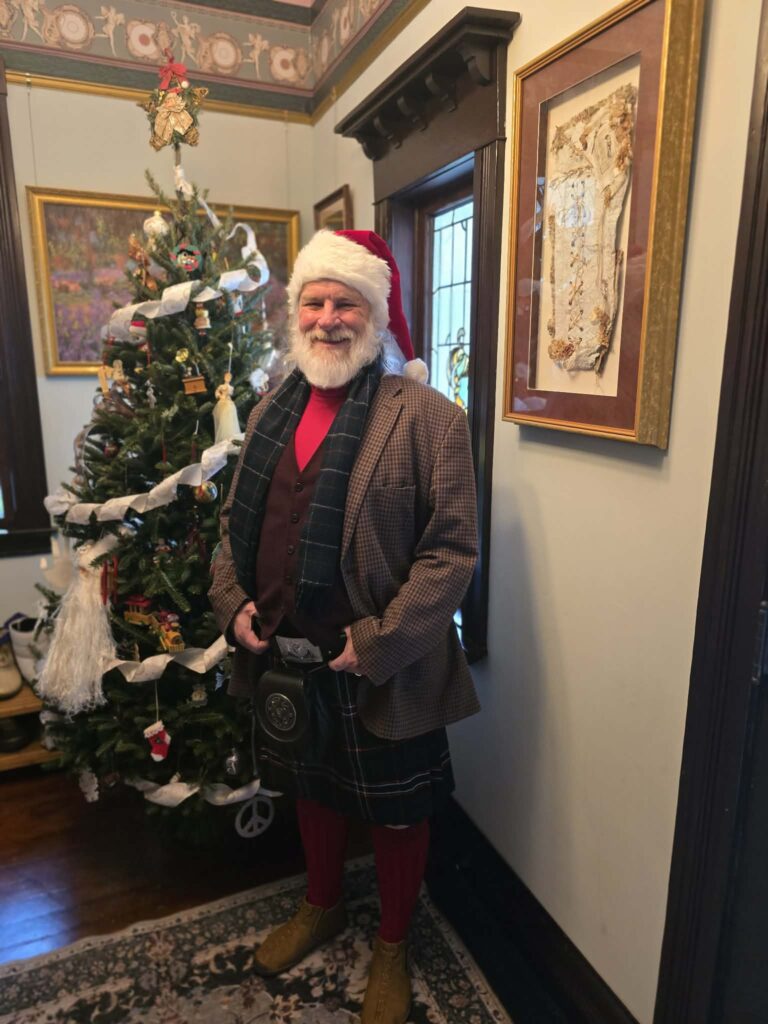
The Legend of Kilted Santa
Long before Santa Claus acquired a global brand strategy and an alarming number of licensing deals, there was another figure roaming the winter world. Older. Quieter. Slightly damp from mist and snow. His name, passed down in whispers and raised mugs, was Kilted Santa.
The legend comes from the far north, where winter is not a charming inconvenience but an endurance test. In these lands, people learned early that joy had to be practical and generosity had to pull its weight. Warmth mattered. Food mattered. And anyone foolish enough to wear flimsy trousers in a blizzard was rightly viewed with suspicion.
Kilted Santa, naturally, wore no trousers at all.
Instead, he was wrapped in thick wool and stubborn dignity. His kilt was heavy, pleated, and weathered, dyed a deep red that looked festive until you realized it came from berries, roots, and sheer determination. The tartan pattern varied depending on who told the story. Some claimed it represented ancient clans. Others insisted it changed depending on the mood of the season. One very honest storyteller admitted that no one ever remembered it clearly because it was usually flapping dramatically in the wind.
That’s because Kilted Santa did not fly. He walked. Everywhere.
Kilted Santa followed old paths that predated maps, cutting through forests, hills, and occasionally crossing frozen lochs straight across, because shortcuts are tempting, and even legends like Kilted Santa are not immune to poor judgment. He carried a staff, sometimes carved with symbols, and sometimes used simply to poke at snowdrifts that looked suspicious. He was often accompanied by animals. A stag. A raven. And once, according to a disputed account, a Yule Cat that refused to leave.
Children were told to listen for Kilted Santa on the longest night of the year. Not for bells. Bells were flashy and unreliable. Instead, they listened for the sound of boots crunching snow and a low humming noise that suggested someone humming a melody that was both ancient and mildly off-key. If you heard it, you were supposed to leave a small offering by the hearth.
Not milk and cookies. Kilted Santa respected effort.
Bread. Soup. Mead. Ale. A candle. Something homemade. Something sincere. Something that said, “We thought of you,” without expecting a receipt in return.
Kilted Santa’s gifts were rarely flashy. He did not do glitter. He did not do batteries. What he left behind were things that lasted.
A wool scarf that fit perfectly, even though no one measured. A hand-carved toy that would survive generations of rough play to be passed down as a family heirloom. A book that turned out to be exactly what someone needed to read that year. Sometimes the gift was not an object at all. It might come in the form of a softened argument. A moment of bravery. A night of deep, dreamless sleep when everything else felt too heavy to bear.
Adults were warned not to get clever about it. You could not trap Kilted Santa. You could not bargain with him. And you absolutely could not leave out store-bought nonsense and expect miracles. He arrived only where generosity already lived, where people shared what they had without keeping score or expecting anything in return.
Homes that hoarded warmth and welcome or locked themselves tight against the world were not punished. They were simply passed by, which somehow felt even worse.
As centuries passed, the legend drifted south and got… simplified. The kilt made people nervous. The silence made marketers and corporations uncomfortable. Slowly, Kilted Santa was replaced with a louder, rounder version who laughed on cue and never tracked snow inside.
But the old stories never disappeared.
Hikers still claim to see a tall figure crossing snowy ridges under moonlight, tartan flashing briefly before vanishing into mist. Children in coastal villages of the Pacific Northwest wake to find fires warmer than expected and gifts that smell faintly of pine, wool, and sea air. Footprints sometimes appear in fresh snow and stop abruptly, as if the walker simply decided to become part of the landscape again.
Skeptics roll their eyes and mutter about ancient folklore. Believers shrug and pour another cup of something warm, then sit by the fire waiting for him.
Because the point of Kilted Santa was never about proof.
The point was remembrance.
Remembering that warmth is more sacred when shared. Remembering that generosity is practical because what we put out into the world returns to us. Remembering that mystery does not need explaining to be real. And remembering that on the darkest night of the year, someone may still be walking the old paths, humming softly to himself, kilt snapping in the wind, checking to see if the world remembers how to share.
And if, just once, you feel watched over by something ancient, patient, and faintly amused by human nonsense, do not panic.
It is probably just Kilted Santa, making his rounds, wondering why anyone ever thought trousers were a good idea.

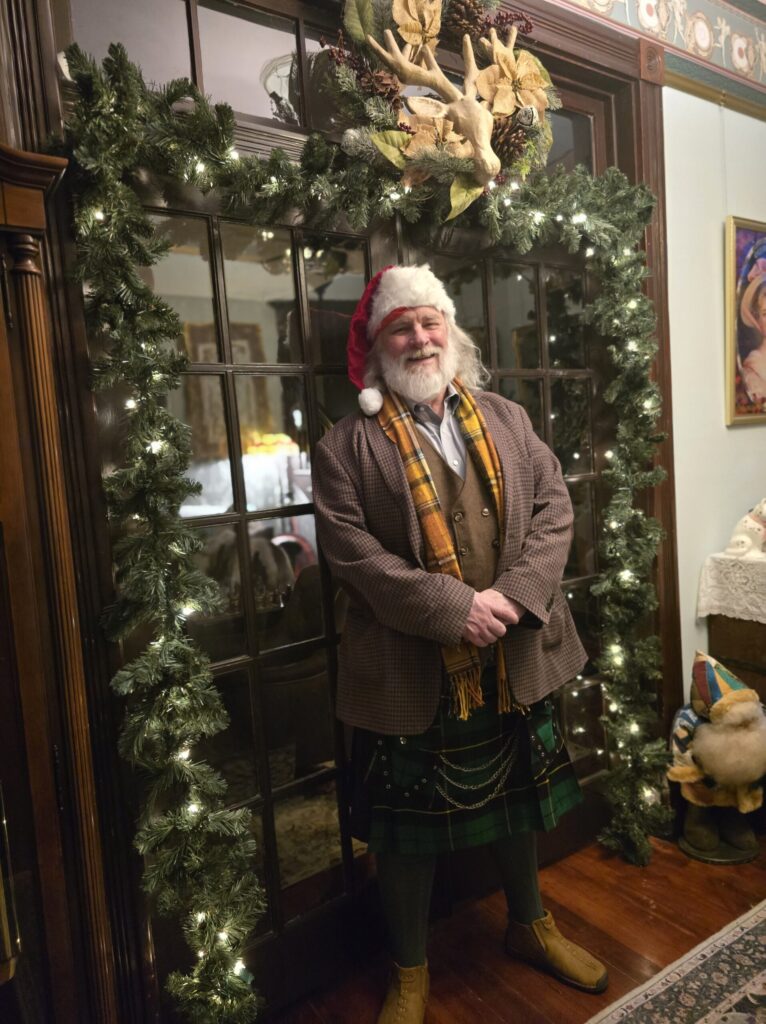
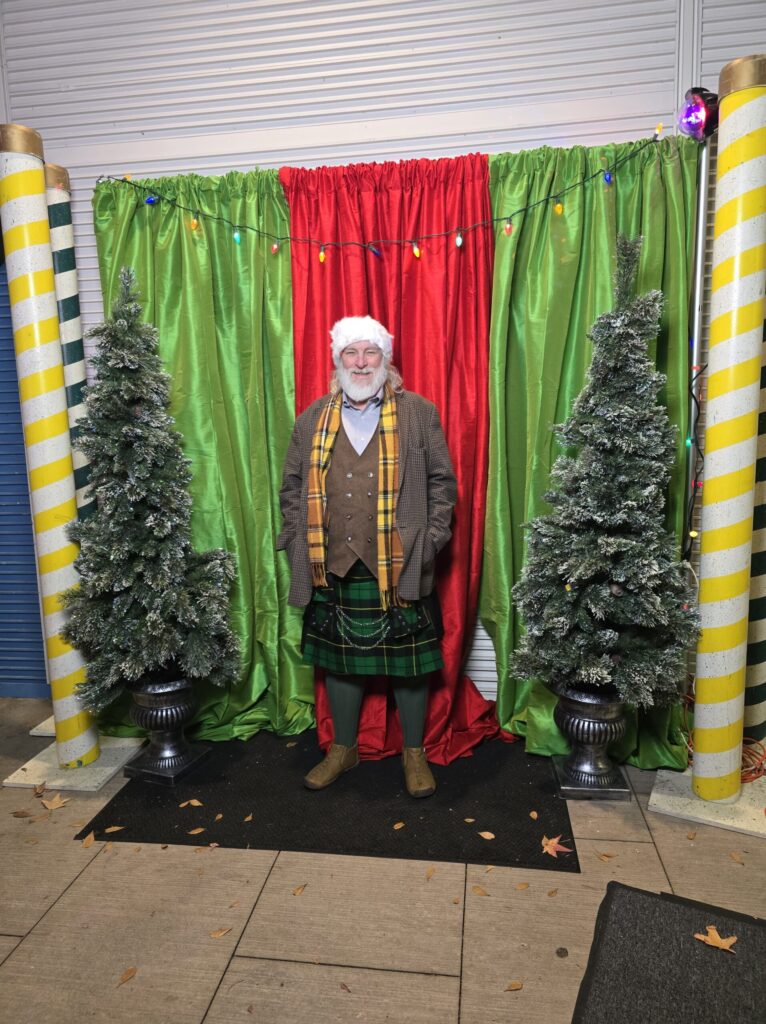
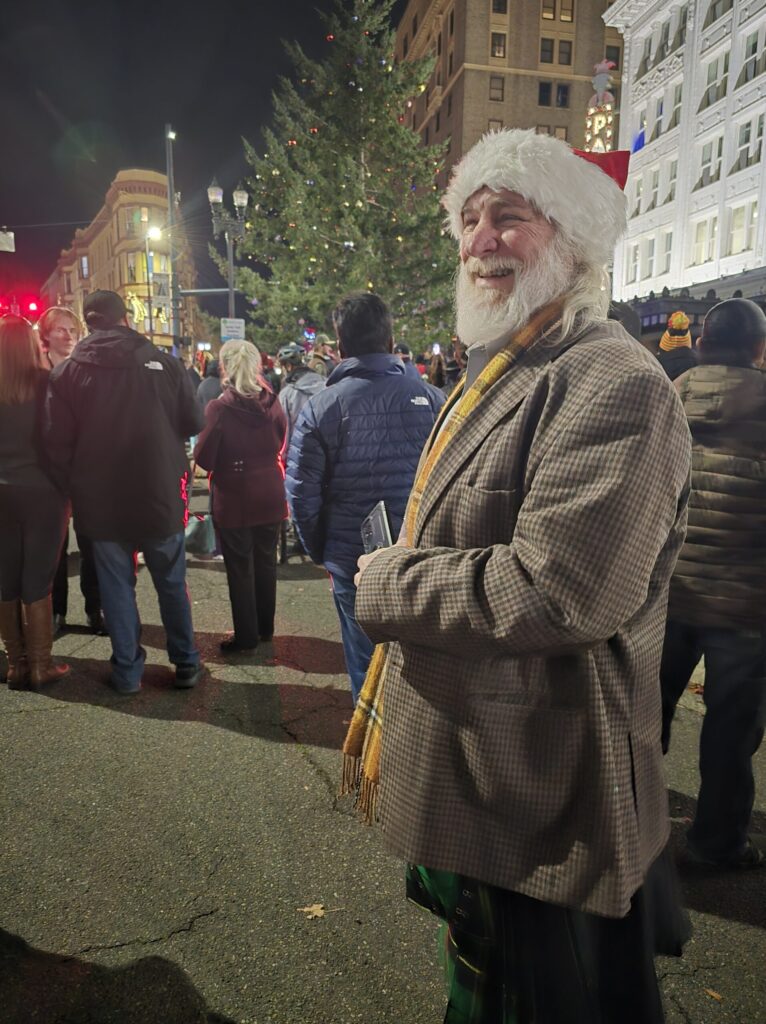
Discover the Timeless Spirit of Kilted Santa
Dive into the ancient traditions and mystical stories that set Kilted Santa apart from the modern holiday figures.

Heritage Rooted in Celtic Mystique
Embrace a rich cultural legacy that celebrates the quiet power and age-old rituals surrounding the winter season.

A Symbol of Wisdom and Reflection
Experience the calming presence of a figure who embodies thoughtful giving and peaceful celebration.

Connecting Past and Present Celebrations
Discover how Kilted Santa bridges old-world charm with today’s festive traditions, enriching the holiday spirit.